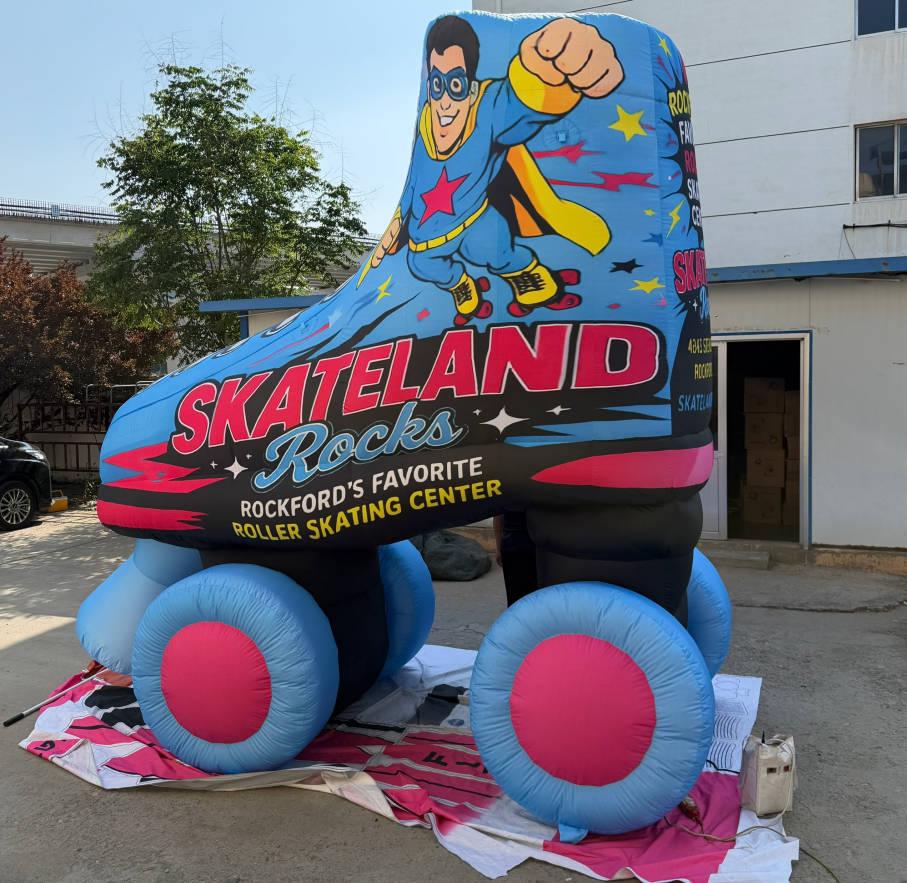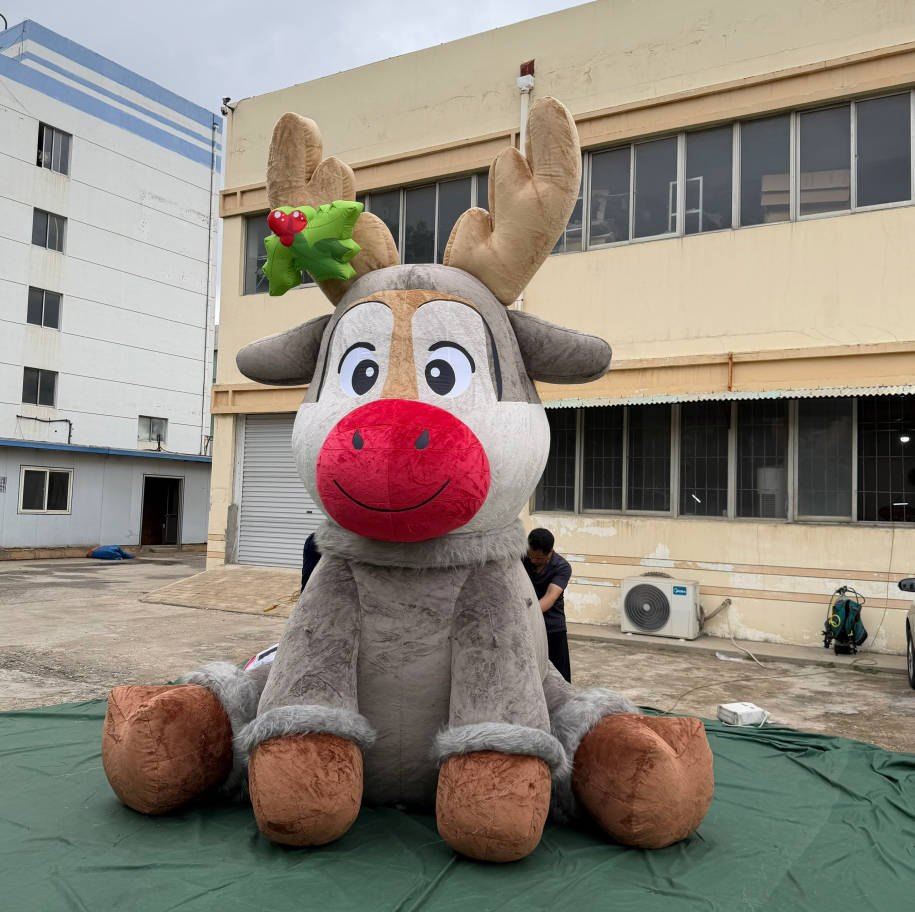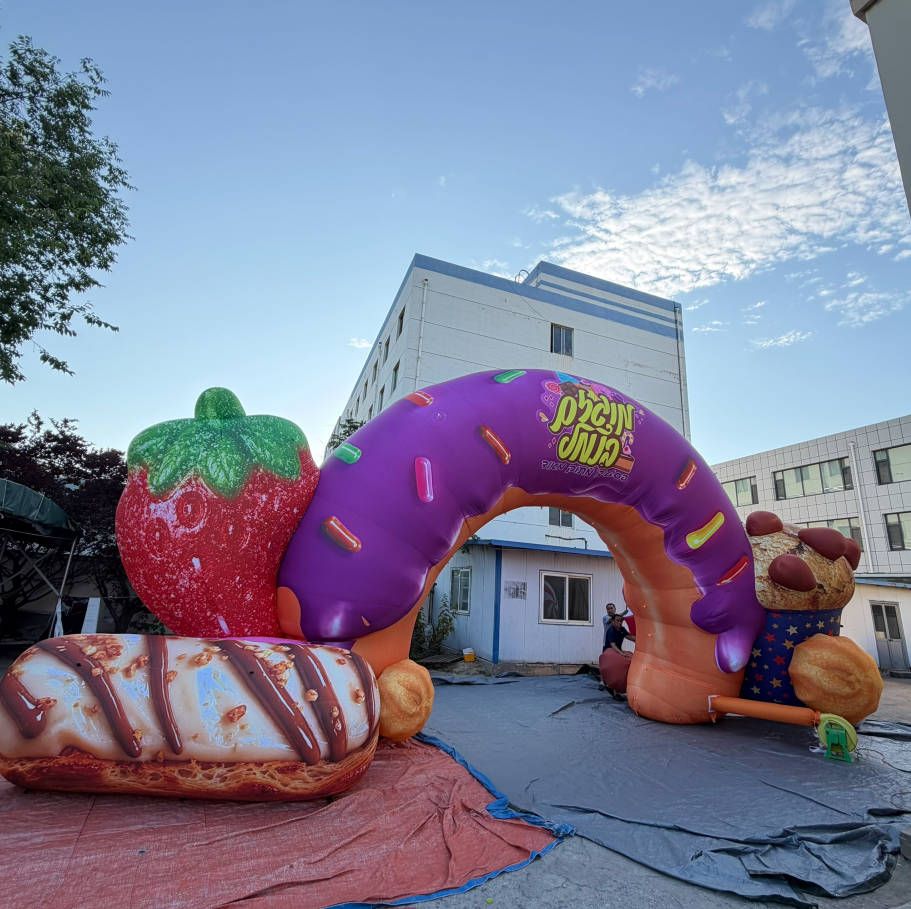

Most Christmas blowups are weather-resistant, not waterproof. Outdoor models can normally handle light rain or snow when correctly installed, but seams, zippers, blower openings, plugs, and power connections remain vulnerable. Standing water, heavy wet snow, strong wind, and poor electrical protection can damage the display or create a safety hazard. The nine measures below help commercial venues, event teams, retailers, and large-property operators protect seasonal installations without treating a fabric decoration like a sealed structure.

Are Christmas Inflatables Waterproof or Only Water-Resistant?
Which parts let water enter?
Most outdoor Christmas inflatables are made from water-resistant fabric that can repel light rain and snow for limited periods. However, the finished product is not completely sealed. Moisture may enter through stitched seams, zippers, air vents, blower openings, cable access points, or areas where fabric panels join.
Because the blower continuously draws in and circulates air, the inflatable cannot function as an airtight or fully waterproof structure. Rainwater or melted snow may also settle in folds, internal low points, or around the base when drainage is poor.
How should buyers evaluate weather-resistance claims?
Buyers should assess the complete system rather than focus only on the fabric description. Check whether the inflatable is approved for outdoor use and review the specified material, blower rating, electrical protection requirements, anchoring method, drainage design, and operating weather limits.
A claim such as waterproof fabric does not mean the fully assembled decoration, blower, plug, extension cable, and electrical connections can be safely exposed to all weather conditions. For a large inflatable arch Christmas installation, buyers should request site-specific guidance covering placement, drainage, power protection, anchoring, supervision, and shutdown procedures for the expected winter weather.
What Should You Do Before Bad Weather Arrives?
Choose an outdoor-rated model and a protected power setup
Use a model intended for exterior installation. Connect the blower through an outdoor-rated, ground-fault-protected circuit and keep every plug connection elevated in a suitable weatherproof enclosure. Do not bury connections under snow, wrap hot equipment in improvised plastic, or use damaged extension leads.
Inspect fabric, seams, zippers, and the blower
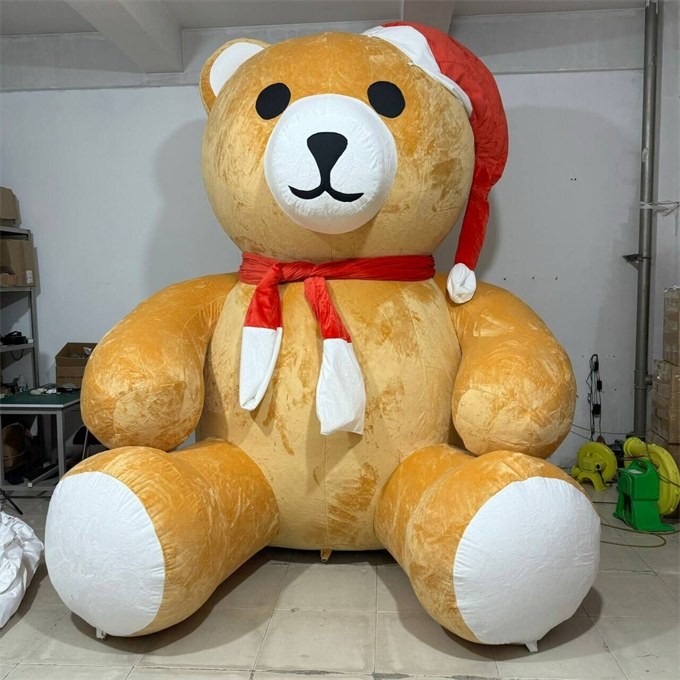
Inflate the unit before deployment and look for torn fabric, loose stitching, blocked air inlets, damaged cables, or unusual blower noise. Check vulnerable high-stress points on a bear inflatable Christmas display and the tall sides of an inflatable Christmas arch.
Select a site with drainage and clearance
Avoid hollows where water pools. Keep the decoration away from vehicle routes, roof runoff, sharp landscaping, heaters, and branches that may drop snow or ice. Leave enough clearance for the inflated form to move slightly without rubbing against walls, signs, or fencing.
How Can You Protect Christmas Blowups During Rain and Snow?
Anchor every designed point correctly
Use all manufacturer-provided tie points, stakes, ropes, or ballast in the specified arrangement. Soil anchors need suitable ground; hard surfaces need approved ballast and a layout that cannot become a trip hazard. An inflatable arch Christmas entrance creates more exposed area than a compact figure, so a site plan matters.
Keep the blower intake and drainage paths clear
Position the blower as instructed and check that leaves, wrapping, drifting snow, or fabric cannot restrict intake. Make sure drain openings and low points remain clear. Do not operate a blower while standing in water, and never move energized electrical equipment with wet hands.
Remove accumulating wet snow
Light dry snow may slide away, while heavy wet snow can distort panels, block air flow, and overload anchors. Deflate safely if accumulation cannot be cleared without climbing, pulling, or striking the fabric. An inflatable Christmas lion with raised paws, a mane, or horizontal surfaces may hold snow differently from a simple cone-shaped tree.
Deflate before the wind exceeds the operating limit
Wind creates dynamic loads that increase rapidly with speed. Forecasts are only a starting point because buildings can funnel gusts. Follow the supplied limit and shut down early when conditions deteriorate. Never add ropes to decorative features that were not designed as structural tie points.
What Should You Do After a Storm?
Drain, reinflate, and dry the decoration fully
AIRART’s service guidance treats maintenance as part of long-term inflatable use. After rain or snow, disconnect power safely, release trapped water, and move the unit to a clean area when necessary. Reinflate in dry conditions so air can circulate, then confirm that seams, accessories, and the blower area are dry before storage.
Clean gently and repair small damage promptly
For cleaning Christmas decorations, remove loose dirt first and use a soft cloth with mild soap if the product instructions permit. Avoid harsh solvents, abrasive brushes, and pressure washing. Let the surface dry completely. Use the specified patch material and adhesive for minor fabric damage; refer to electrical or blower faults to a qualified technician.
How Can a Seasonal Display Last More Than One Year?
What storage routine prevents mildew and creases?
Pack only when the fabric is clean and fully dry. Fold loosely along different lines where practical, protect printed surfaces, label accessories, and store the bag off the floor in a cool, dry place. Keep the blower, stakes, ropes, repair kit, and manual together so the next installation is complete.
Which records help multi-site operators?
Create an asset record for each display with photographs, dimensions, electrical details, anchoring components, repair history, and assigned location. For a Christmas archway inflatables programme, record who inspected each site and when weather shutdowns occurred. A repeatable checklist is more reliable than seasonal memory.
Why Choose AIRART for Custom Christmas Inflatables?
How do we customise products for a venue or campaign?
At AIRART, we design holiday inflatables for Christmas and other seasonal themes, with custom shape, size, pattern, and colour options. Our product knowledge includes arches, illuminated decorations, cartons, and large event pieces. We use design development and heat-transfer printing to create distinctive visual forms for yards, squares, halls, restaurants, retail spaces, and event entrances.
What practical support do we provide?
Our team can prepare suitable D-rings, lighting options, blowers, cables, carry bags, and repair materials according to the project specification. We provide maintenance and repair guidance because careful handling supports repeated seasonal use.
FAQ
Q: Can you leave Christmas inflatables on all night?
A: Only when the product instructions, site rules, electrical setup, weather, and supervision plan allow continuous operation. Many operators switch displays off during severe weather or unattended periods. Use timers only if the blower and circuit are designed for the intended schedule.
Q: What happens if water gets inside an Christmas inflatable?
A: Disconnect power safely, follow the manufacturer’s drainage instructions, and dry the fabric completely before storage or reconnection. Do not energize a wet blower or plug. Persistent electrical problems need a qualified inspection.
Q: How do you keep an inflatable bear Christmas decoration from blowing away?
A: Install every specified stake, rope, or ballast point on suitable ground, keep the unit fully inflated, monitor gusts, and deflate before wind reaches the stated limit. Never rely on the blower weight alone or attach restraints to decorative fabric that was not designed for anchoring.